
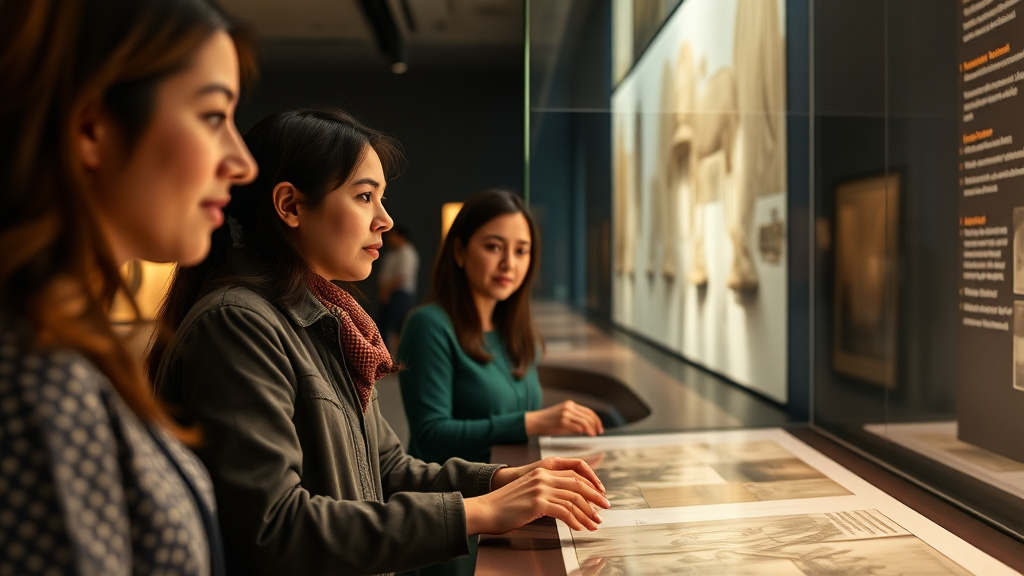
Museums are transforming into engaging environments where community histories take shape. Contemporary forward-thinking curators are reimagining exhibitions that go beyond traditional displays, designing interactive journeys that honor varied perspectives and preserve heritage for generations to come. By blending innovative techniques with compelling narratives, these forward-thinking experts are rethinking traditional viewpoints and encouraging visitors to connect meaningfully with their own cultural identity. Explore how innovative exhibition strategies are transforming the museum sector and reimagining what it means to recognize our shared human story.
Modern Exhibition Strategies toward Cultural Heritage Narratives
Modern museum curators are revolutionizing how heritage narratives are presented to audiences worldwide. By transcending static displays, they develop participatory settings that invite guests to examine their own identities and connections to ancestral histories. These experts employ multi-sensory engagement, integrating visual art, sound, and tactile elements to deepen affective resonance. Modern displays now represent varied viewpoints often overlooked in traditional museums, guaranteeing marginalized communities witness their stories genuinely honored and recognized.
Technology operates as a vital factor in reshaping curatorial practice and patron interaction. Digital installations, AR experiences, and virtual reconstructions permit audiences to engage with historical moments and cultural frameworks with unprecedented immediacy. Curators leverage these tools to bridge geographical and temporal distances, making heritage accessible to international audiences. This digital incorporation doesn’t substitute for human storytelling; rather, it amplifies curatorial perspective, empowering curators to communicate sophisticated accounts with resonance and comprehensibility that conventional approaches alone cannot deliver.
Collaborative curation represents another groundbreaking strategy transforming museum exhibitions today. Curators more frequently collaborate with community members, cultural practitioners, and descendant groups to ensure authentic representation of their heritage. This collaborative framework affirms that communities themselves are the primary experts on their own histories and cultural significance. By prioritizing community perspectives in exhibition design, museums evolve from traditional institutions into spaces for dialogue where diverse narratives coexist and strengthen collective understanding.
Cross-disciplinary research approaches strengthen current museum curation markedly. Curators now partner with anthropologists, historians, scientists, and artists to analyze cultural artifacts from various analytical viewpoints. This integrated approach exposes hidden connections between objects, historical occurrences, and cultural customs. By bringing together multiple disciplines, displays become more nuanced and intellectually rigorous, giving visitors sophisticated understandings of how cultural identity develops through multifaceted interactions of history, geography, economics, and human creativity.
Thematic adaptability allows curators to examine contemporary issues through cultural and historical lenses. Modern exhibitions showcase how heritage informs present-day identity challenges, community activism, and social cohesion. Rather than depicting culture as static or historical, innovative curators demonstrate its dynamic, evolving nature. This approach connects strongly with audiences seeking meaning and connection, transforming museums into spaces where past and present dialogue meaningfully.
Accessibility and inclusivity have become core exhibition principles in groundbreaking exhibitions. Museums now create displays taking into account diverse learning styles, physical abilities, and different cultural perspectives. Multiple language options, sensory-friendly hours, and varied engagement levels allow wider visitor groups engage with exhibitions. This dedication to access reflects modern curatorial philosophy that cultural heritage belongs to everyone and should be accessed in an inclusive way.
Interactive Exhibitions and Community Involvement
Modern museums are reshaping visitor encounters through engaging displays that transform passive observation into direct engagement. These dynamic installations invite audiences to discover heritage stories firsthand, fostering deeper bonds with cultural identity and heritage. By weaving in hands-on activities, digital interfaces, and engaging atmospheres, curators create spaces where visitors act as collaborative interpreters. Community engagement initiatives extend beyond gallery walls, cementing museums as essential community centers that represent and champion the multiple viewpoints of their neighborhoods and constituencies.
Participatory Design Methods
Curators now utilize participatory design methodologies that place community members at the center exhibition creation. This co-creative framework confirms that cultural representations accurately represent real-world experiences and viewpoints of the featured communities. By facilitating in-depth conversations, discussion panels, and co-creation workshops, museums build trust and accountability. These engagement practices convert exhibitions into spaces for conversation, where silenced voices become heard and audiences encounter narratives created by community members with lived experience.
The blending of public perspectives throughout the curation workflow generates displays that engage more deeply with different communities. Museums employing audience participation strategies report higher attendance rates, enhanced educational impact, and deeper community ties. This shared approach disrupts established power dynamics where curators maintained exclusive authority over interpretation. Instead, collections serve as communal venues where multiple perspectives interact, enriching the audience engagement and building more inclusive inclusive cultural accounts that celebrate authentic community stories.
- Convene community advisory councils directing exhibition themes
- Facilitate joint working sessions involving cultural stakeholders
- Integrate audience input into educational resources
- Feature community members in the role of display collaborators
- Create ongoing dialogue with community cultural institutions
Well-designed community-engaged exhibitions show measurable impacts on public engagement and heritage conservation. Museums using these strategies witness higher visitor numbers from historically excluded populations and stronger advocacy for cultural institutions. The community-centered model proves especially valuable for displays examining marginalized identities and cultural legacy, as community engagement ensures authenticity and meaningful connection. These jointly-created exhibitions ultimately advance wider museum objectives of equity, public access, and ethical commitment while producing meaningful encounters that enhance public comprehension of cultural expression.
Protecting Cultural Legacy Via Technological Advancement
Digital technology has transformed how museums protect and display cultural heritage. Advanced scanning techniques record intricate details of artifacts, building comprehensive digital archives open to researchers and the public worldwide. Immersive VR environments take people into historical moments, allowing them to examine ancient civilizations and cultural sites from their homes. These modern technologies ensure that vulnerable historical objects are preserved while remaining available for learning and instruction and scholarly research. Museums now leverage artificial intelligence to catalog collections, identify patterns in cultural artifacts, and strengthen protective measures significantly.
Interactive digital spaces democratize access to cultural treasures previously accessible solely to museum visitors. Web-based exhibitions displaying high-resolution images, 3D models, and rich media reach global audiences, eliminating geographical barriers to heritage access. Museums partner with communities to develop digital repositories that highlight local heritage and customs. These programs empower cultural groups to control their narratives and convey cultural identity on their own terms. Social media integration extends museum reach, fostering active online communities where people engage with cultural identity and heritage preservation consistently.
Augmented reality applications improve physical museum visits, overlaying digital information onto displayed artifacts. Visitors scan objects with smartphones to retrieve detailed histories, artist perspectives, and contextual cultural information instantly. Gamification elements promote deeper exploration, transforming passive observation into engaging educational encounters. These combined methods appeal to diverse audiences, particularly younger generations accustomed to digital interaction. Museums report higher visitor engagement and prolonged visits when augmented reality features support traditional exhibitions effectively.
Artificial intelligence tools support curators in examining vast collections, uncovering underrepresented narratives, and suggesting thematic connections. Machine learning algorithms identify patterns in cultural artifacts, showing relationships between different traditional practices. Predictive analytics help museums forecast visitor interests and tailor exhibition experiences accordingly. These technologies empower curators to develop more representative exhibitions reflecting multiple perspectives and underrepresented histories. Digital innovation empowers museums to challenge historical narratives and provide multifaceted interpretations of cultural identity thoroughly.
Crowdsourcing programs engage communities to submit personal stories and artifacts to digital collections. Museums partner with cultural groups to convert to digital format community-held treasures, building joint collections that celebrate community heritage. Web-based tools enable visitors to upload visual materials, texts, and accounts related to exhibitions. This participatory approach converts museums into gathering places where historical preservation becomes a shared responsibility. Digital tools enable cross-generational conversation, connecting ancestral expertise with younger generations looking for heritage links and cultural awareness.
Looking ahead, museums continue to advance digital preservation technologies to secure cultural heritage endures environmental challenges and societal changes. Blockchain technology offers secure, decentralized archiving of cultural records, safeguarding intellectual property rights of indigenous communities. Virtual museum experiences will become increasingly sophisticated, providing personalized journeys through cultural narratives. Museums will incorporate emerging technologies while preserving curatorial integrity and community collaboration. Digital innovation ultimately serves museums’ fundamental mission: safeguarding humanity’s diverse heritage and facilitating meaningful cultural engagement across generations and continents.
